One Week in Cape Town: The Perfect 7-Day Itinerary for First Time Visitors

This post may contain affiliate links. If you book through these links, we may earn a small commission at no extra cost to you. We only recommend experiences we personally enjoyed or genuinely believe are worth it.

Cape Town is unquestionably one of the most beautiful cities in the world, and there is so much to see and do, so trying to cram everything into your first visit can seem like a daunting task. From stunning beaches and mountains to unbelievable food and wildlife, there is something for everyone in Cape Town.  A week is the perfect amount of time to see the highlights while still leaving space to relax and enjoy the city.  So hopefully our basic itinerary in this post, will give you the start you need to build upon to create your perfect one week itinerary in Cape Town.

Day One- Arriving in Cape Town

What you arrange for Day one, completely depends on what time you arrive in Cape Town, where you are staying and whether you’ve hired a car.  

For us, we arrived around 7pm and by the time we collected our car and reached our accommodation, it was past 10pm. After a long travel day, we simply ordered a takeaway, and honestly that felt like the best decision for us.

If you are staying close to V&A Waterfront, Sea Point or Green Point then you have lots of easy dinner options within walking distance, if you did feel like heading out on your first night. (Unsure where to stay- check out this post)

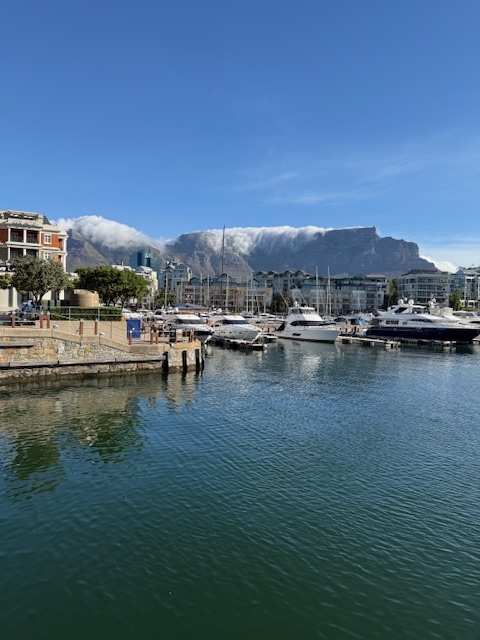
If you do arrive earlier in the day, you’ll have a bit more flexibility. However we’d still recommend keeping things relaxed, take a walk around your area, familiarise yourself with nearby shops and restaurants, and ease into the city. If you based near the V&A Waterfront, a leisurely stroll around the shops and the harbour followed by drinks and dinner to soak in the incredible atmosphere, would be the perfect way to start your week in Cape Town.

Day Two- Table Mountain & Camps Bay

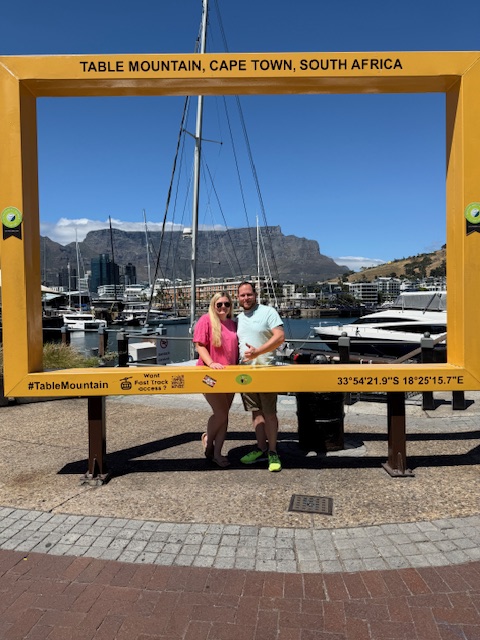
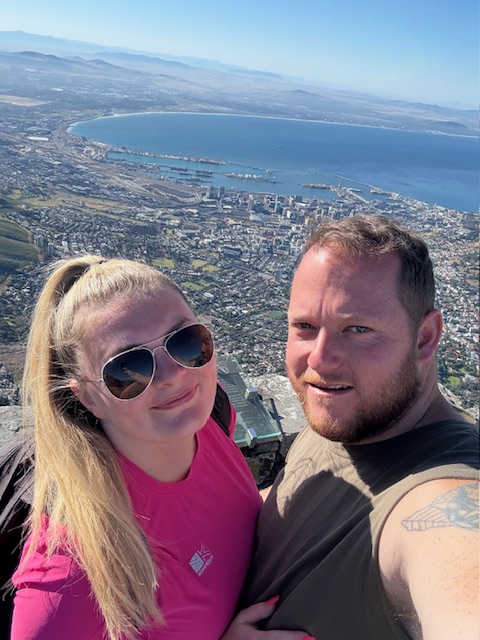
No first trip to Cape Town is complete without visiting Table Mountain, it’s an absolute must! From the moment you arrive in Cape Town, you feel the presence of Table Mountain looming in the background from almost anywhere in the city, but standing at the top and taking in the views is a whole experience in itself. Dedicating your second day to this iconic landmark makes complete sense.

Visiting Table Mountain can be weather dependant, so it’s best to plan this for early in your trip in case you need flexibility.  The cable car can be closed due to high winds or low cloud, sometimes for days at a time. So be prepared to swap this out with another day in your itinerary. Most tickets are valid for several days (we booked through Get Your Guide), which allows you to adjust if needed- something we were grateful for when our original day was cancelled.  
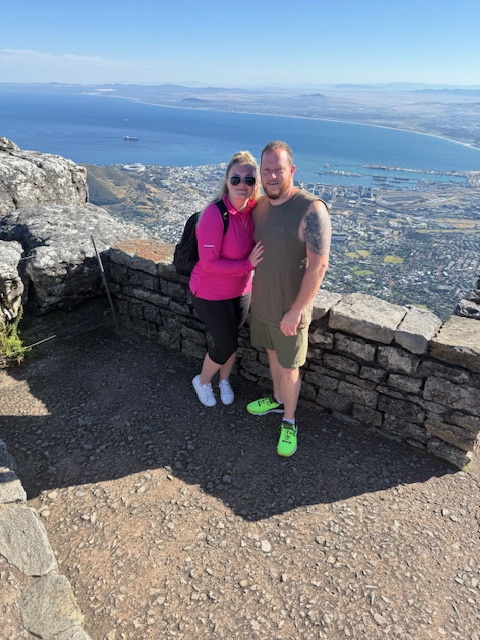
At the top of Table Mountain

If you wake up early on one day of your week in Cape Town, make it the day you visit Table Mountain. We arrived around 7am despite them not opening until 8am, and it was absolutely worth it. By the time we were coming back down after spending an hour or two at the top of the mountain, the queue was HOURS long (even if you have a ticket for a certain time).

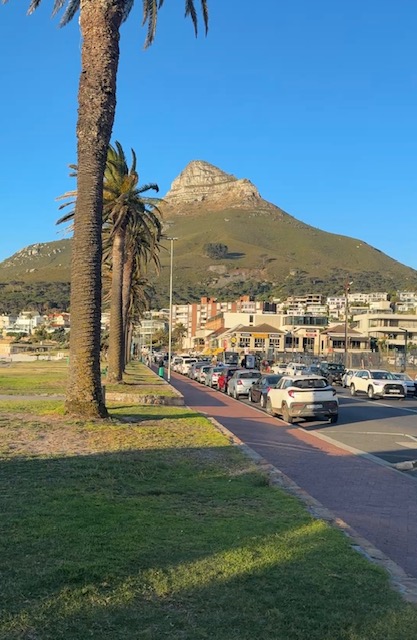
After heading back down, make your way to Camps Bay wither by car or Uber. Within 15-20 minutes, you will be welcomed by beautiful white sandy beaches framed by the dramatic backdrop of the Twelve Apostles mountain range, and a strip with plenty of restaurants and bars. If you plan on swimming (braver than us), be prepared, as the Atlantic Ocean is freezing! However Camps Bay is a perfect spot to relax on the beach, enjoy the scenery and watch the stunning African sunset whilst eating incredible food in one of many restaurants.

Camps Bay Views

TIP: If you are hiring your own car, parking at the Cable Car station is possible but fills up very quickly especially during peak season. Arrive as early as you can to avoid parking very far away and walking uphill to the station.

Day Three- Robben Island & V&A Waterfront

After taking in the natural beauty of Table Mountain, Day three is the perfect time to explore one of the citys most important historical landmarks: Robben Island.

Located just off the coast, Robben Island is where Nelson Mandela was imprisoned for 18 years during apartheid. A visit here is both educational and moving, showing a deeper insight to South Africa’s history.

Tours depart from the V&A Waterfront and typically last around 3-4 hours, including the ferry journey across Table Bay and a guided tour of the prison itself. This activity can be weather dependant as the ocean can get rough, so if it’s a non-negotiable for your trip its best to plan earlier in your itinerary so if you need to re-schedule it’s possible to do so.

It is also recommended to book tickets well in advance, especially during peak seasons, as the tours quite often sell out. You can then ensure a morning departure, leaving you the rest of the afternoon to explore the Waterfront.

If Robben Island isn’t for you, consider an ocean safari instead. We stumbled across a company called African Ocean Safaris whilst wondering around the Waterfront and ended up on a two hour marine boat trip in search for whales, dolphins, seals and even penguins- and we were lucky enough to see several. The guides are marine biologists, incredibly knowledgeable about the local ecosystem and the impact of tourism on marine life. It turned into one of the most educational experiences we’ve ever done, and would highly recommend (available to book on Get Your Guide).  
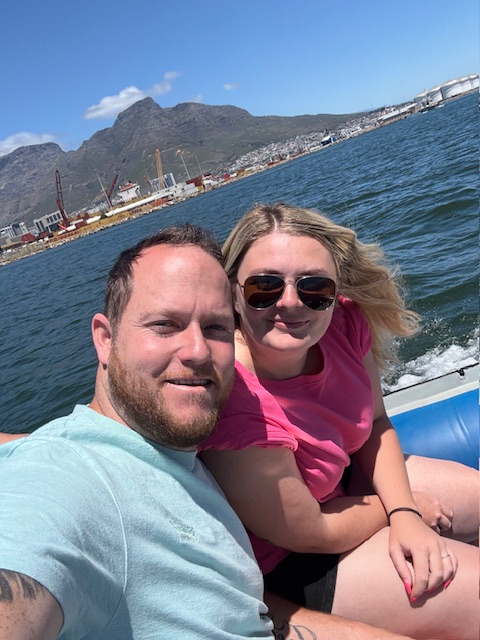
Ocean Safari

Once back from either activity, spend the rest of the day exploring the V&A Waterfront. This area is lively yet relaxed with a mix of shops, restaurants, markets and harbour views. It’s a great place to slow the pace after the morning activities. You could even visit the Two Oceans Aquarium, which is very affordable and interesting even if you are an all adult party. It’s easy to spend a whole afternoon/evening exploring the waterfront with plenty of options for dining to suit all budgets.

Day Four- Boulders Beach/Cape Peninsula

Day Four is all about dramatic coastlines, wildlife encounters and one of the most scenic drives in the world. If you hire a car at any point during the week in Cape Town, then this is the day we’d recommend doing it- it gives you the freedom to explore the coastline at your own pace.

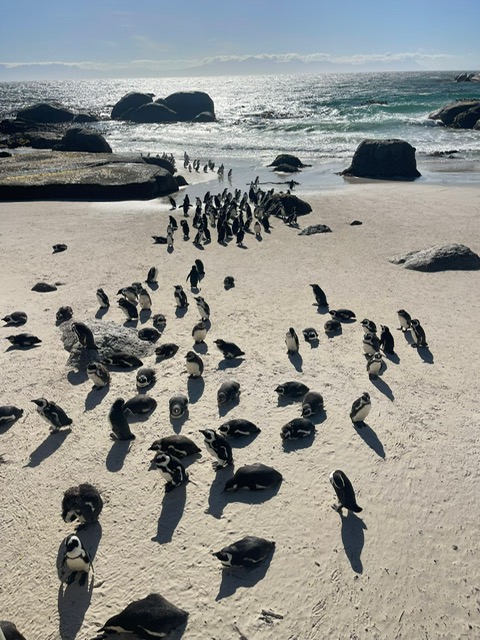
Start your morning at Boulders Beach to see the colony of endangered African penguins. We’d suggest arriving at opening time (8am) to avoid the crowds as it can be very busy on the boardwalk platforms during peak hours. If you visit on a windy day, be prepared for some serious sand-blasting- this happened to us and definitely added to the experience!

Seeing the penguins wander freely between the huge granite boulders with the turquoise water as a backdrop feels very surreal- it almost looks like they don’t belong there. If you are brave enough, you can also swim at the adjacent beach (but its freezing!) and you may even spot some penguins nearby.

There is a small conservation fee to enter the boardwalk area, which goes towards protecting the penguins and their nesting sites. The walkways allow you to get surprisingly close without disturbing them. Keep an eye out for rock hyrax (often called Dassies) sunbathing on the rocks- they’re small, rabbit-like animals and incredibly cute.
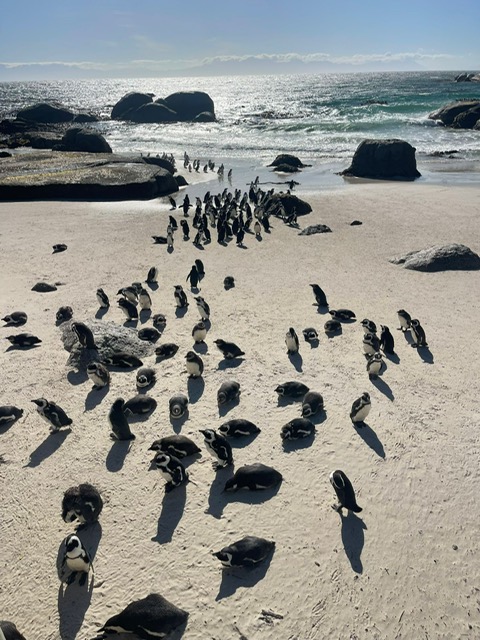
Penguins at Boulders Beach

After visiting Boulders Beach, you could stop in Simons Town for breakfast and a short wander around. It is a relaxed naval town which feels far less touristy than central Cape Town.  

From here, continue driving south into the Cape Point Nature Reserve, part of the stunning Table Mountain National Park. This is where the scenery becomes wild and dramatic-rugged cliffs, crashing waves and endless ocean views.

Drive up to Cape Point lighthouse for panoramic views over the coastline. You can either walk up or take the Flying Dutchman funicular part of the way. Nearby, you will also find the famous sign marking the Cape of Good Hope. It can get busy during peak hours, so you may need a little patience for photos! Keep an eye out for baboons, ostriches and antelope which are commonly spotted as driving around the reserve.
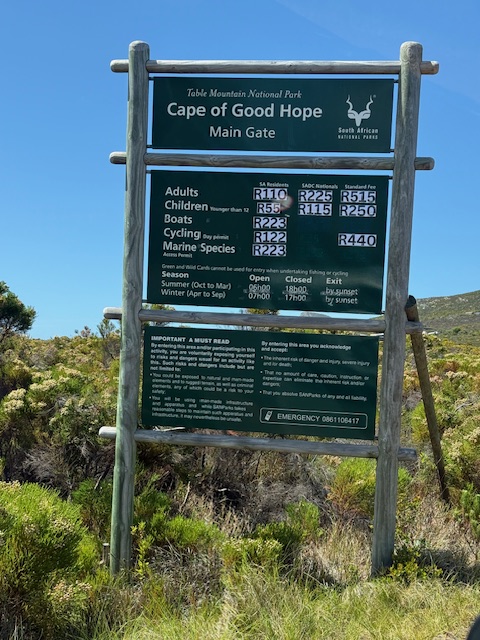
Cape of Good Hope

On your way back towards Cape Town, take the incredible Chapmans Peak Drive. This coastal road hugs cliffs between Hout Bay and Noordhoek and it’s definitely one of the most scenic drives in the world. There is a small toll fee, but it is well worth it for the views which you can stop and admire at many viewpoints along the way.

We stopped in Hout Bay on the way back and enjoyed some delicious fish and chips at Fish on the Rocks and had a wander around the Bay Harbour market, which sells goods and more food. It’s a great place to finish the day- especially if you time it to catch the sunset over the harbour before heading back to Cape Town.

Day Five- Beach Day or Kirstenbosch National Botanical Garden

After a full day exploring the Cape Peninsula, Day five is a perfect opportunity to slow the pace. Depending on your travel style, this can either by a relaxed beach day or a scenic afternoon in the gardens.

If you are visiting Cape Town for sunshine and scenery, then a dedicated beach day is well deserved. You could return to Camps Bay for white sand and the vibrant atmosphere, or head to Clifton beaches for a slightly quieter setting with sheltered coves. Both are perfect places to relax with a book, enjoy the scenery and soak up the laid back Cape Town lifestyle. You can pair this with a beachfront brunch, an afternoon cocktail or a sunset dinner overlooking the ocean.

If you’d prefer something a little more active but still relaxed, then spend the day at Kirstenbosch National Botanical Garden, set against the eastern slopes of Table Mountain. The gardens are beautifully maintained and showcase South Africa’s unique flora. It is an ideal place for a gentle wander, enjoy a picnic of simply enjoy the mountain backdrop.

If you are feeling energetic, there are hiking trials which connect to Table Mountain National Park that you could enjoy. Otherwise, bring snacks and enjoy a slow afternoon on the lawns.

Day Six- Wine Estates

No week in Cape Town is complete without visiting the nearby wine regions at least once- even if you don’t drink wine! Just 45 minutes from the city, the Cape Winelands feels like a completely different world and consists of rolling vineyards, mountain backdrops, beautifully designed estates and of course, exceptional wine!

The two most popular areas to explore are Stellenbosch and Franschhoek. Both are stunning, so your choice really comes down to personal preference. It is worth planning to visit 3-4 estates in the day. Trying to squeeze in more can quickly feel rushed and overwhelming- especially with generous tasting pours!
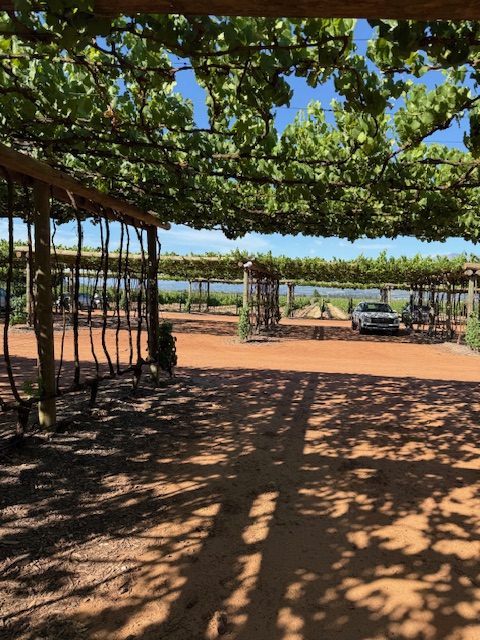
Babylonstoren Wine Estate

One of the most popular ways of exploring Franschhoek is via the Wine Tram, which has multiple routes to choose from, it allows you to hop between estates without worrying about driving. It is a very relaxed and scenic way to experience multiple vineyards in one day. If you are hiring a car however and you don’t plan to drink, driving yourself offers more flexibility. You can spend as long as you like at each estate and choose vineyards slightly off the main tourist routes- which is what we did.  

The options are truly endless when planning to visit the wine estates, but you do need to take into consideration that some estates require reservations- particularly if you are booking cellar tours, food pairings or dining at on site restaurants. During peak season, booking ahead is highly recommended.

Day Seven- Choose Your Final Adventure

By Day Seven, you’ve seen the highlights of Cape Town- mountains, beaches, wildlife and wine. Use your final full day to revisit a favourite spot or explore any other activities you haven’t had the chance to do so far.

Here are a few great options that aren’t already covered in this itinerary:

Bo- Kaap– Wander through the colourful streets of Bo-Kaap, one of Cape Towns most photographed neighbourhoods. Beyond the bright houses, this area has deep cultural roots and fascinating history. Consider visiting the museum or joining a Cape Malay cooking class for a more immersive experience.

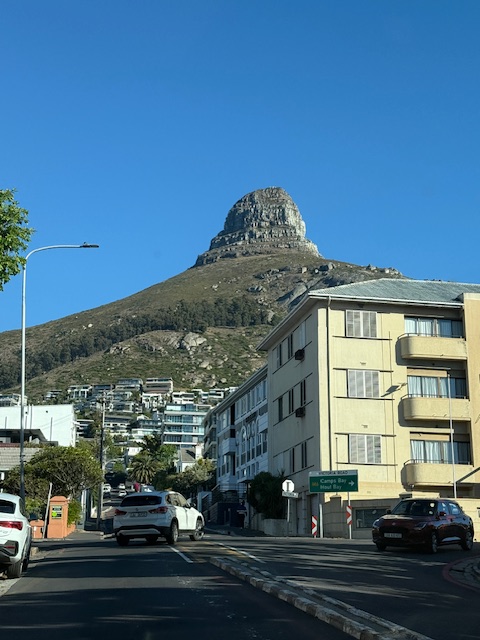
Hike Lions Head– For one final iconic view, hike Lions Head at sunrise or sunset. The hike is shorter and more manageable than Table Mountain but still has incredible views to take in. Hiking at sunset is especially popular, seeing the Atlantic coastline all glowing in golden light.

Safari Experience– If you wanted to add a safari into your South Africa trip, then there is the option to take a day trip safari from Cape Town. While not comparable to Kruger National Park, you would still have the opportunity to see lions, elephants and rhinos for example within driving distance of the city.

Day Eight- Fly Home

After an unforgettable week exploring Cape Town and beyond, its time to head home- likely already planning when you are going to return.

Cape Town is one of those destinations that truly has it all. In just one week, you can hike up Table Mountain, meet penguins at Boulders Beach, drive the breath-taking Chapmans Peak Drive, explore powerful history on Robben Island and sip world class wine in the Cape Winelands.

What makes Cape Town so special isn’t just the scenery- it’s the balance. You can have slow beach mornings, adventurous afternoons and unforgettable sunsets all in the same day. Whether you are visiting for nature, food, culture or relaxation, a week here gives you a well-rounded taste of everything Cape Town has to offer.

Of course, you could easily spend longer- there’s always another hike, another vineyard or another beach. But if you only have seven days, this itinerary ensures you experience the very best of Cape Town without feeling too rushed.

Planning a trip to Cape Town? Save this itinerary so you have it ready for when you start booking- and share it with your travel partner so you can start counting down the days!

Unsure on whether Cape Town is safe to visit as a tourist? Check out our post here.
Where to stay in Cape Town: Best areas for couples (and where we stayed)

Deciding where to stay in Cape Town is a hard decision, as there are so many options and lots of factors to consider like budget, your itinerary and perhaps if you are going with children. And of course, safety plays a huge part in deciding the location (check out our post on safety in Cape Town).

As a couple who likes to be central to the areas we plan to spend the most time in, we did a lot of research on what would work well for us, we also consider things like local restaurants and bars and if these are in a walkable distance and also grocery stores, as we mostly stay in AirBnBs and like the option to be able to cook for ourselves or at least have the facilities to keep drinks, snacks and not fully rely on having to eat out every day.

The Area We Stayed in: Green Point (Our Honest Experience)

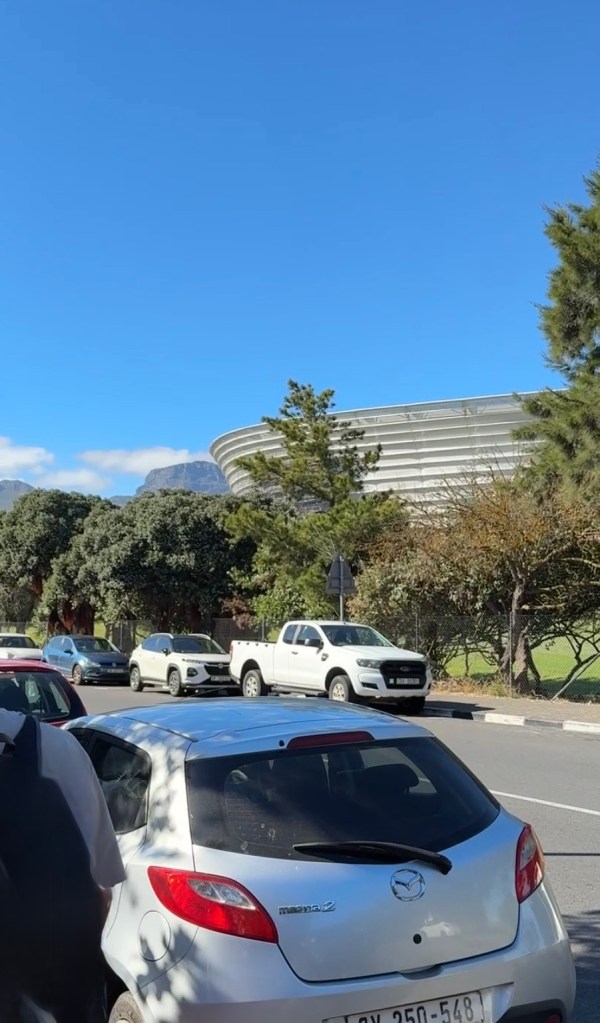
Green Point is the area we decided to stay in during our time in Cape Town, and overall it worked extremely well for us as a couple. We stayed in an AirBnB close to the seafront and Cape Town Stadium, which meant we were in walking distance of the V&A Waterfront, as well as plenty of restaurants and bars.  We found this a very central location enabling us to fit in all of our itinerary. Our AirBnB also came with a secure parking space, which was essential for us having hired a car.

From a safety point of view, Green Point felt comfortable and well populated, particularly during the day and early evenings. On a couple of occasions, we walked to and from dinner and didn’t feel uneasy doing so, even when it was a bit later at night. The area felt calm but still lively enough that there were always people around, which definitely added to the sense of security.

Green Point (where we stayed)

Location-wise, Green Point was ideal for getting around Cape Town. It was a short walk to the V&A Waterfront, where we spent many mornings and afternoons, and also a short drive to Sea Point, Camps Bay and the city centre. This made day trips to Table Mountain, Boulders Beach and Cape Winelands very easy. Having a central base meant we felt like we were never spending too much time in the car.

One of the things we really liked about staying in Green Point was that it felt less touristy than some areas, while still being visitor friendly. It had a good balance between feeling local and feeling safe, which is something we value when travelling as a couple. It is also budget friendly, not the cheapest area but also not the most expensive.

When we visit Cape Town again, Green Point is definitely an area we would consider again.

Other Popular Areas to Stay in Cape Town (Based on our research)

V&A Waterfront

The V&A Waterfront is one of the most popular areas to stay in Cape Town, particularly for first time visitors. It is still very central and you are surrounded by restaurants, shops and attractions. It’s considered one of the safest areas in Cape Town, largely because it’s very tourist-focused and has higher security measures in place. Because of that, accommodation is a bit more on the expensive side. However, it is a great option if you want convenience and you also don’t plan on hiring a car, as you have many transport options.

V&A Waterfront

Sea Point

Sea Point is lively, still pretty central and known for its promenade, cafes and ocean view properties. It is popular with the locals and tourists and it does offer a good range of accommodation options. It is slightly more expensive and busier than Green Point but still a solid choice for couples who want to be closer to the action and nightlife.

When driving through Sea Point, it did look like an area we would consider staying in a future visit to Cape Town. However, it is a bit more of a walk to the V&A Waterfront.

Camps Bay

Camps Bay is known for its beach, sunsets and luxury feel. While it is definitely one of the more beautiful areas to stay in Cape Town, it’s also one of the most expensive and less central for sightseeing. We feel this area would be more suited to couples who have maybe been to Cape Town before and are looking for a more relaxed, beach-focused stay over the tourist attractions.

Budget Tips for Accommodation in Cape Town

Apartment vs Hotel

For couples travelling to Cape Town, we feel apartments (such as AirBnBs) often offer better value for money than hotels, especially for longer stays. Having access to a kitchen can significantly reduce food costs, particularly if, like us, you don’t want to eat out for every breakfast, lunch and dinner.

Apartments also tend to feel more local, which we personally prefer when travelling as a couple. Hotels can still be a good option for shorter stays or if you value on-site amenities, such as housekeeping, a pool or breakfast included, but from a budget and flexibility point of view, we’d personally choose an apartment.  

Location over Luxury

We feel location is far more important than luxury when it comes to budget. Staying in a central, well connected area sometimes can be more costly per night, but you are saving money on transport and time spent travelling across the city. Green Point, Sea Point and V&A Waterfront all easy access to major attractions, restaurants and beaches so you are less reliant on taxis or long drives. Higher- end stays, perhaps in Camps Bay or even in the Winelands, would be more suited to couples who aren’t looking to travel around as much or visit the tourist attractions.

Camps Bay

Car Hire vs Walkability

Whether or not you hire a car or not can have an impact on accommodation budget. If you choose a walkable area close to restaurants, shops and attractions, you may not need to hire a car at all as you can use Uber for the slightly longer journeys. On the other hand, hiring a car can be worthwhile for longer stays and if you plan to explore Cape Point, Boulders Beach and the Winelands. With hiring a car, you also need to think about choosing accommodation with secure parking.

We personally did hire a car for our first trip to Cape Town, as we wanted the freedom to explore the further afield attractions however if we do go back, we wouldn’t feel like it’s necessary if we were still staying in a central location.  Car hire and Ubers are both relatively affordable in Cape Town, so it really comes down to personal preference and your itinerary.  

Final Thoughts: Best Areas to Stay in Cape Town for Couples

Choosing where to stay in Cape Town really depends on your travel style, budget and what you want to prioritise during your trip.

For us a couple, Green Point offered best balance of location safety, walkability and value for money. Being so central made getting around Cape Town incredibly easy.

If it’s your first time visiting and you want maximum convenience, the V&A Waterfront is a great option, especially if you don’t plan to hire a car. Sea Point is ideal if you want a lively atmosphere with great food options, while Camps Bay suits couples looking for a more relaxed, beach-focused stay, maybe best for second visits.

Wherever you choose to stay, doing a bit of research and picking an area which suits your itinerary will make a huge difference to your overall experience in Cape Town.

Lions Head

You can also read our full post on Is Cape Town safe for Tourists? to help you decide which area feels right for you.

Is Cape Town Safe For Tourists? What We Actually Experienced

Cape Town is possibly one of the most beautiful cities we have ever seen, with the mountainous backdrop and the golden sandy beaches, it really does appeal for so many reasons. However, the question in the back of most people’s minds is, is visiting Cape Town safe?

Like most people, we did a bit of research before we headed off to South Africa and we saw mixed reviews and honestly we didn’t really know what to expect, so we are hoping in this post we will be able to answer some questions about safety and what we felt comfortable with and what we didn’t feel so comfortable with to help you make that decision on visiting Cape Town.

Table Mountain Viewpoint

How safe we personally felt as a couple

Millions of tourists visit Cape Town every year, and of course each one has completely different experience depending on what you do, where you go and who you may come across. I guess that is the same for any big cities which are popular to visit, but there is a looming online opinion of Cape Town being one of the most dangerous cities in the world.

With one half of us growing up in Zimbabwe, I guess we have a slight advantage in knowing what behaviours to keep an eye on or look out for and avoid but it was still our first time in Cape Town so it was still our first genuine impressions that we can talk about. We personally never felt unsafe during our trip, we were aware of our surroundings and we ensured we took on board all the safety tips anyone would give you for a big city.

Areas we felt comfortable in and around Cape Town

The areas you visit when in Cape Town is highly dependent on what you want to experience on your trip. From the Wine Estates in Stellenbosch to the V&A Waterfront, both in different locations and both have different atmospheres but might not be the reason you are in Cape Town. Based on the areas we visited, we will tell you where we felt most comfortable:

V&A Waterfront– This shopping centre and area has one of the most beautiful backdrop and views across the harbours and the ocean and you can see why so many people visit every year. This is a highly populated area for tourists and we felt very safe walking around day and night.

V&A Waterfront in the evening

Green Point– This is actually the area we stayed in, our AirBnB was located on the sea front in line with the stadium and we felt this was the perfect location for what we wanted to do in Cape Town (check out our post on Where To Stay in Cape Town) We didn’t feel unsafe once, despite arriving very late at night and we also walked to and from restaurants at night with no issues. We can’t comment on whether this changes when the stadium is in use, but we assume it’s a case of being slightly more aware with more people in the same area.

Boulders Beach/Simons Town– With the penguins being such a popular tourist attraction, we went to Boulders Beach first thing in the morning when they first opened. This worked really well, as it was very quiet and we could take our time without feeling overcrowded or unsafe at any point. As this is a paid attraction, you are mostly surrounded by fellow tourists who are there to see the penguins which added to a more relaxed and comfortable atmosphere.  

We then visited Simons Town on the way back, which felt like a very laid back and tourist friendly town. We stayed for breakfast and had a short wander around and at no point did we feel uncomfortable or on edge.  

Boulders Beach

Table Mountain– Table Mountain is the most famous landmark of Cape Town (and for good reason), so it attracts a huge amount of visitors every single day. There are several ways to experience Table Mountain, but we opted for the cable car. We arrived very early to avoid queues and ended up in the very first cable car up, so it didn’t feel overly crowded. Once at the top, it’s such a large open area but there are always other tourists and staff around so there wasn’t any point we felt unsafe during our visit.

Hiking is another popular option, which we were originally planning to do, so we had already done a lot of research on this. Although we didn’t hike in the end, common advice we came across included not hiking alone, sticking to the popular routes and avoiding hiking in the dark- all worth keeping in mind if you do choose to hike.  

Where we were a bit more cautious in Cape Town

CBD Area– We didn’t spend much time in this area, other than driving through and eating at a restaurant one evening but we did feel like we needed to be a bit more cautious here as it felt less tourist- focused. There was a higher visible presence of homelessness and people asking for money or food, so we were more mindful of our surroundings, particularly avoiding having phones or valuables on show.

When we left the restaurant and were waiting for our Uber, the atmosphere felt noticeably less comfortable, and we felt it was especially important to use Uber rather than anyone approaching and offering a ride.  

Airport– We read a lot of horror stories about driving around Cape Town, specifically to and from the airport so we did feel a little bit nervous when we realised our flight was late and we wouldn’t be arriving until dark. We did not have a bad experience with this at all but we were much more alert and aware as it’s an area that is often mentioned online in relation to car-related crimes.  

You also need to be very mindful of which roads you are taking as you don’t want to end up in the unknown areas, so it is incredibly important to have your route mapped out before you head off. Obviously, if you haven’t hired a car and you are getting an Uber or transfer, then they will know the roads well and which to take and avoid.

Getting around safely

Hiring a car in Cape Town is not a necessity, and it does depend on what your itinerary looks like. For us, as we were travelling around a bit and wanted to visit places like Boulders Beach and the Wine Estates, we felt it was ideal to have the freedom of hiring a car. It is important to do some research before you go on the routes you plan to take, stick to the main roads, and avoid wrong turns into areas you are unfamiliar with. It is also worth mentioning that no matter where you are and how safe you feel, you shouldn’t leave valuables, bags or belongings in the car when parked.

We also found car hire in Cape Town incredibly cheap compared to other places we’ve travelled. For a week, we paid £160 for a larger car, as there were four of us and we had a months’ worth of luggage.

If hiring a car doesn’t feel necessary for your trip, then you can definitely rely on Uber, which we used on a couple of occasions- especially when drinking, as there is zero tolerance for drink driving in South Africa. We found Uber to be cost effective, reliable and won’t break the bank even if you do want to be visiting places like Cape Point or Boulders Beach.

Another option is the Hop on Hop off Bus, while we didn’t personally use this, family and friends have and said it covers most major tourist attractions and is budget friendly. It could be a good option if you’re not keen on driving or using Ubers.

General Safety Tips

These are not specific to Cape Town, but things we kept in mind during our trip:

  • Be aware of your surroundings at all times, especially in the less busy, less touristy areas
  • Avoid having phones, cameras or valuables on display- especially in a parked car
  • If you aren’t hiring a car, use Uber, we found it safe, reliable and affordable
  • Avoid walking around alone at night- and if possible, avoid walking at night altogether
  • Plan routes in advance to avoid getting lost while driving
  • Avoid hiking alone or in the dark

Would we go back?

Without hesitation, absolutely!

Cape Town is an incredibly beautiful city with so much to offer, from the stunning scenery and beaches to amazing food and unforgettable experiences. While it’s important to be aware and take sensible precautions, our overall experience was very positive and we felt comfortable throughout our entire trip.

As with many large cities around the world, being informed and prepared makes all the difference. Based on our experience, we wouldn’t let safety concerns alone put you off from visiting Cape Town. We genuinely believe it deserves a place on everyone’s bucket list!

Us at the top of Table Mountain

Have you visited Cape Town, or are you planning a trip? We’d love to hear about your experiences or answer any questions in the comments.

Read our full post on Where to Stay in Cape Town to help you decide which area works best for you.

This post is based entirely on our personal experience as a couple travelling to Cape Town, and everyone’s trip may differ depending on itinerary and comfort levels.